OCR A-Level
Chemistry tutor.
One-to-one online lessons for OCR A‑Level Chemistry A and Chemistry B (Salters). I’m an experienced examiner, and I find where your child is losing marks, teach the chemistry those questions need, and practise with real OCR questions and mark schemes so they can answer them under exam conditions.
I usually reply within 24 hours to arrange a free chat or a first lesson, whichever you prefer.
Where OCR students usually lose marks.
From 19 of OCR’s examiners’ reports on the Chemistry A papers.
- Unfamiliar settings. Questions that put familiar chemistry in a setting students haven’t met before, a point OCR’s reports raise again and again.
- Calculations. Marks are often lost because the working isn’t set out clearly, or the answer isn’t rounded as the question asks.
- Answering the question asked. Not answering the exact question, or missing information the question gives.
- Equations. Writing and balancing chemical equations, especially for reactions students haven’t seen before.
- Explanations. Answers that are vague, or that use a word loosely where a precise scientific term is needed.
- Practical work. From naming the right equipment to describing a method or handling results.
Lessons built on real OCR questions.
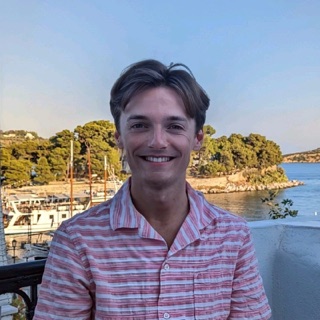
I’m Joe White. I mark A‑Level scripts as an examiner every year, and I have tutored A‑Level chemistry since 2016. I currently teach OCR A‑Level students, and I built this site’s free generator of real OCR Chemistry A past-paper questions. Lessons use real OCR questions, marked against OCR’s own mark schemes.
Ask about OCR lessons“After a few weeks of our son starting 6th form college however, with a new teacher, his grades started to drop down from As to Cs and he lost all his confidence… Mr White thankfully stepped in and has been phenomenal in helping our son to reach his potential. … thanks to his help our son got his first medical school interview invitation today.”
- A.A diagnostic first lessonAn exam-style task to find the gaps, then a plan for the weeks ahead.
- B.Topic by topic, then paper by paperWeekly lessons on the topics that cost the most marks, moving to full past papers before the exams.
- C.The practical activitiesExam questions about the practical work done in class, which can come up on any of the three papers.
- D.Help between lessonsStudents can message me on WhatsApp with questions between lessons, at no extra cost.
- E.60-minute online lessonsGoogle Meet and a shared whiteboard. A tablet with a pen works best; a cheap drawing pad for a laptop does the job, and lessons still run without either.
Three A‑Level papers, plus the AS (H032).
Chemistry A is taught in six modules; Papers 1 and 2 each use four.
Paper 1
Periodic table, elements and physical chemistry. Opens with 15 multiple-choice questions.
Paper 2
Synthesis and analytical techniques: organic chemistry and how chemists identify substances. Opens with 15 multiple-choice questions.
Paper 3
Unified chemistry: questions that draw on the whole course and on practical skills.
AS (H032)
Breadth in chemistry, which opens with 20 multiple-choice questions, and Depth in chemistry. A separate qualification from the A‑Level.
Chemistry B (Salters) is also three A‑Level papers: Fundamentals of chemistry, Scientific literacy in chemistry (with an advance notice article to read before the exam), and Practical skills in chemistry. All the A‑Level papers are sat in May and June of Year 13.
OCR tuition questions.
Which OCR course does my child sit?
Check the exam entry, or ask the school. Chemistry A is H432 (AS H032), taught in six modules. Chemistry B (Salters) is H433 (AS H033), taught through storylines such as Elements of life and Colour by design, and its second paper comes with an advance notice article to read before the exam. I can tutor either course.
Does my child need to sit the AS?
Usually not. Most schools no longer enter students for the AS, because it is a separate qualification and does not count towards the A‑Level, which comes only from the three papers at the end of Year 13. If your child’s school does enter them, lessons cover it too. The practical endorsement is a separate pass or fail from the school, and does not affect the grade either.
When should we start, and is Year 13 too late?
Starting in Year 12 gives time to build steadily. Year 13 is usually not too late: one of my students went from a starting grade of B to an A in a single year, and over two years another went from a starting grade of U to an A. Weekly lessons suit most students; some add a second lesson in the run-up to the exams.
Can you help a student aiming for an A*, or applying for medicine, pharmacy or another competitive course?
Yes. Students aiming for an A* usually know the chemistry already; they mostly drop marks in the ways described above, and on the hardest questions in each paper. I also help with personal statements, interview preparation and course choices.
Do you teach students who are resitting?
Yes, including students who have left school. A student resitting after school usually enters as a private candidate through an exam centre, and entry deadlines come early in the year, so it is worth checking them soon. A practical endorsement already passed can usually be carried forward.
What can my child use between lessons?
My free generator of real OCR Chemistry A past-paper questions, by topic, with OCR’s mark schemes. For Chemistry B, lessons use OCR’s Salters past papers.
When are lessons?
Weekly lessons at a regular time between 3pm and 10pm UK time, Monday to Friday. A lesson can be moved with reasonable notice; lessons missed without notice are still charged.
How much does it cost?
£70 an hour for A‑Level, paid by bank transfer the day before each lesson. There is no contract, and either side can stop at any time.
Do you teach OCR GCSE too?
Yes. GCSE lessons are £60 an hour, and the main tuition page has the details.
Book a first lesson.
Send me a message with the course (Chemistry A or B), the current grade and the target grade, and I’ll suggest a first lesson. If you would like to talk first, we can arrange a free chat.